
Key Takeaways
- Someone with dementia may be able to live in assisted living, depending on their stage and care needs.
- Assisted living can work well for early to mid-stage dementia with manageable daily support needs.
- Memory care offers a more focused environment for when care needs grow.
- Recognizing the right time to transition can bring relief and renewed connection for the whole family.
- Touring a senior living community is a gentle, no-pressure first step.
Dementia and Assisted Living: What Families Need to Know
When someone you love is living with dementia, it can feel like every decision carries enormous weight. You want them to feel safe, cared for, and, above all, still like themselves. It’s natural to wonder whether assisted living is even an option, or whether you need to jump straight to something more specialized.
The short answer is yes, someone with dementia can live in assisted living, and for many people in the earlier stages, it can be a genuinely good fit. The right community, like Highland Senior Living, will offer daily support, meaningful connection, and personalized care, all without stripping away dignity or joy. Knowing what to look for helps your family move forward with clarity instead of uncertainty.
What Assisted Living Can Offer Someone with Dementia
A good assisted living community does more than check boxes. For someone with dementia, it can provide the structure and consistency that makes daily life feel manageable and even enjoyable. Predictable routines, familiar faces, and regular activities help residents feel grounded from one day to the next.
Personalized care plans are a big piece of this. With this individualized approach, care is shaped around each resident’s needs, preferences, and personality. That means your loved one gets the support they actually need. And because staff get to know residents personally, that support is delivered with genuine warmth.
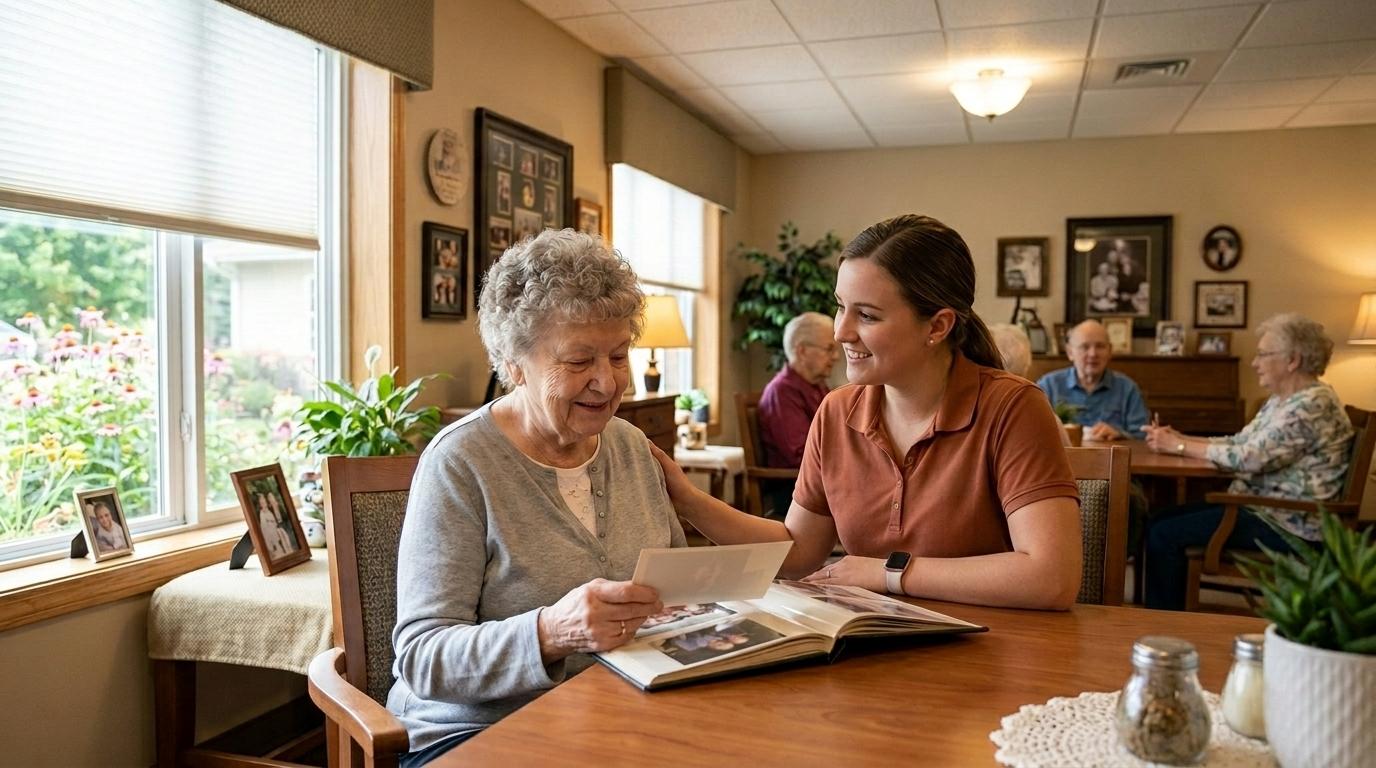
Social connection is another quiet but powerful benefit. Many people living with dementia begin to withdraw at home simply because opportunities for engagement shrink. In assisted living, daily programs, shared meals, and communal spaces create natural moments for connection that can brighten a person’s whole day.
Assisted Living vs. Memory Care: What Is the Difference?
When Assisted Living May Be a Good Fit
Assisted living tends to work well for people in the early to mid-stages of dementia, when care needs are present but manageable. If your loved one can still follow a basic routine, engage socially with some support, and respond well to gentle reminders, assisted living can offer just the right level of help without feeling overwhelming.
At this stage, the social environment is actually a real advantage. Staying active and connected can support emotional well-being in a meaningful way. The key is finding a community where staff are attentive and care plans can grow alongside changing needs.
When Memory Care Becomes the Right Next Step
As dementia progresses, care needs often become more complex. When daily safety, wandering risk, or confusion starts to increase significantly, memory care can offer a more focused environment designed specifically for those needs. It’s not a step back. It’s simply a different kind of support.
Memory care communities provide consistent routines, spaces designed to feel calm and navigable, and staff trained specifically in dementia care. For families, knowing their loved one is in an environment built around those needs can bring real peace of mind. Learning more about when to transition to memory care can make that conversation a little easier to have.
Signs It May Be Time to Explore Senior Living Options
Sometimes the hardest part isn’t knowing what to look for. It’s admitting that things at home have shifted. Safety concerns are often the first signal, things like leaving the stove on, getting disoriented in familiar places, or struggling with medication routines. Familiarizing yourself with the early warning signs of dementia can help you know when it’s time to take that next step.
Caregiver exhaustion is another honest sign. Caring for a loved one with dementia is a full-time role, and it’s okay to acknowledge when the support you can offer has reached its natural limit. Seeking more help isn’t giving up. It’s one of the most loving things a family can do. When your loved one also seems isolated, restless, or in need of more consistent daily interaction, that’s worth paying attention to as well.
How to Choose the Right Senior Living Community
Questions to Ask During a Tour
Touring a community gives you a real sense of whether it’s the right fit. Ask how care plans are adjusted as a resident’s needs change over time. Ask what a typical day looks like, what activities are offered, and how staff handle difficult moments with residents.
Pay attention to how staff interact with current residents during your visit. Warmth, patience, and genuine familiarity are things you can feel when you walk through the door.
What a Supportive Community Looks Like
A supportive senior living community looks after the whole person, not just their physical care needs. Spiritual and emotional well-being programs, one-on-one support, and social engagement opportunities all contribute to a life that still feels full and meaningful.
When staff know residents by name, know their stories, and genuinely enjoy spending time with them, that’s the kind of environment where people can truly belong.
What Comes Next for Your Family?
Transitioning a loved one to senior living doesn’t mean stepping away. It often means showing up differently, with more energy, more presence, and less worry about whether they’re safe. At Highland Senior Living, the goal is to support both residents and their families through every chapter of this journey.
Touring a community is a low-pressure way to start. You’ll get a feel for the environment, ask your questions, and leave with a clearer sense of what’s possible. The right fit can bring your family something that’s been hard to find lately, relief, belonging, and a little more peace.
Contact us today to schedule your visit.