
Key Takeaways
- Assisted living provides hands-on support with daily tasks while encouraging personal choice and independence.
- Care plans are shaped around each person’s individual needs—not a one-size-fits-all approach.
- Residents enjoy home-cooked meals, social activities, and a warm sense of community.
- Assisted living is different from both independent living and memory care in meaningful ways.
- Touring a senior living community can help your family feel more at ease about the next step.
A Closer Look at What Assisted Living Offers
When a loved one starts to need a little more help with everyday life, it can feel like a lot to sort through. You want to find something that genuinely supports them without taking away the things that make them feel like themselves. That’s exactly where Highland Senior Living and assisted living step in.
Assisted living is a type of senior living that provides daily support with personal care, health coordination, and community life — all while honoring your loved one’s independence and individuality. It’s not about doing everything for someone. It’s about being there when they need a helping hand and stepping back when they don’t.
What Assisted Living Actually Looks Like Day to Day
Life in assisted living isn’t rigid or institutional. Your loved one still has their own space, their own schedule, and their own sense of self. The difference is that support is always nearby — whether that’s help getting dressed in the morning or a friendly face at mealtime.
Care plans are built around each person, not a standard checklist. Some residents need a little help here and there, while others benefit from more frequent check-ins throughout the day. Either way, the goal is the same: helping your loved one feel happy, comfortable, and at home.
Personal Care and Health Support Services
Daily Personal Care
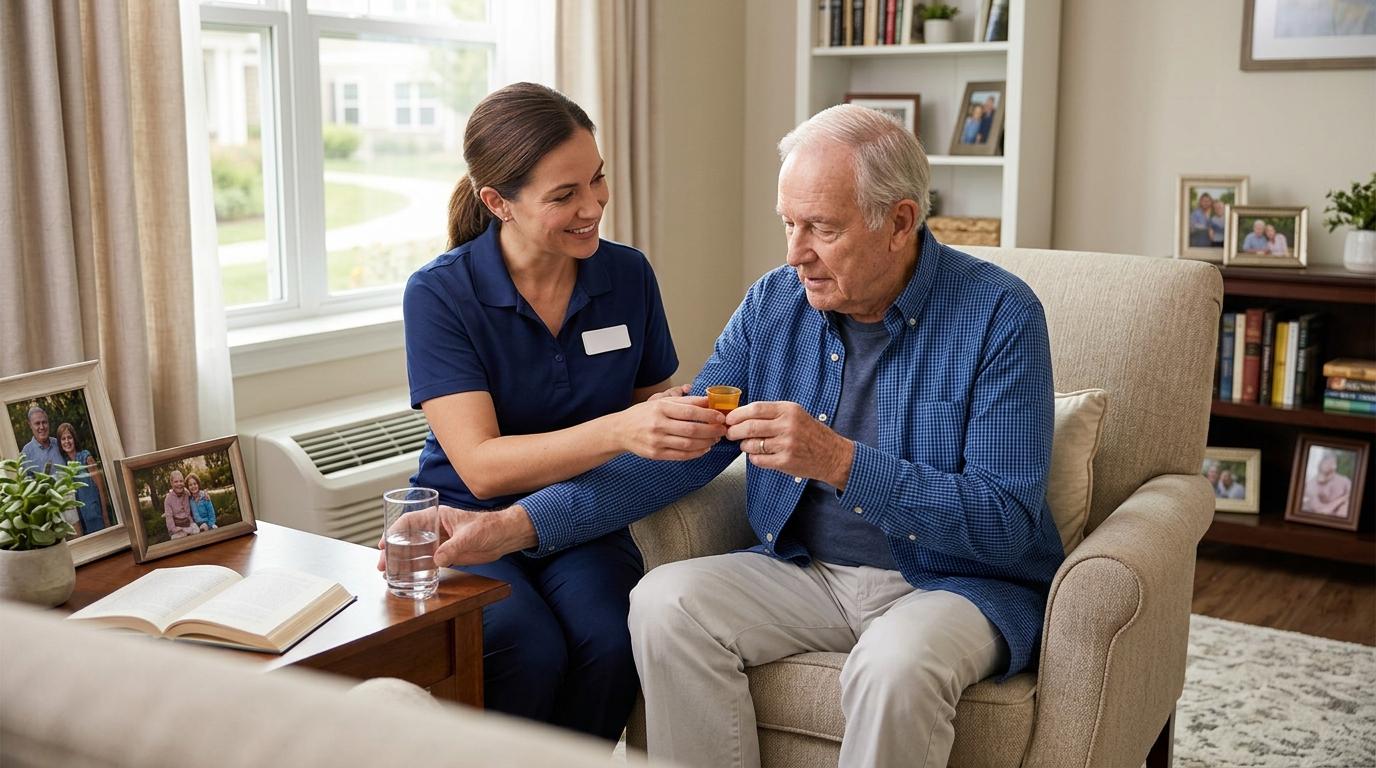
Assisted living communities provide consistent, one-on-one support with the everyday tasks that can become challenging over time. That might include help with grooming, bathing, dressing, and getting around safely. Medication reminders and management are also a regular part of the day for many residents.
What makes this support meaningful is the consistency. Your loved one gets to know the care staff, and the care staff gets to know them, their preferences, their routine, and what makes them feel their best. That kind of relationship matters more than most people expect.
On-Site Health and Wellness Programs
Good care goes beyond physical assistance. Many assisted living communities offer access to primary care coordination and health navigation right on-site, so your loved one doesn’t have to travel far for the support they need. You can explore the full range of services and amenities available to get a sense of what that day-to-day support looks like in practice.
Spiritual and emotional well-being also play a big role. Chaplains are available for one-on-one visits, spiritual groups, and thoughtful conversations—offering comfort that goes beyond physical care. It’s a whole-person approach that recognizes every part of what makes someone feel well.
Dining, Amenities, and Community Life
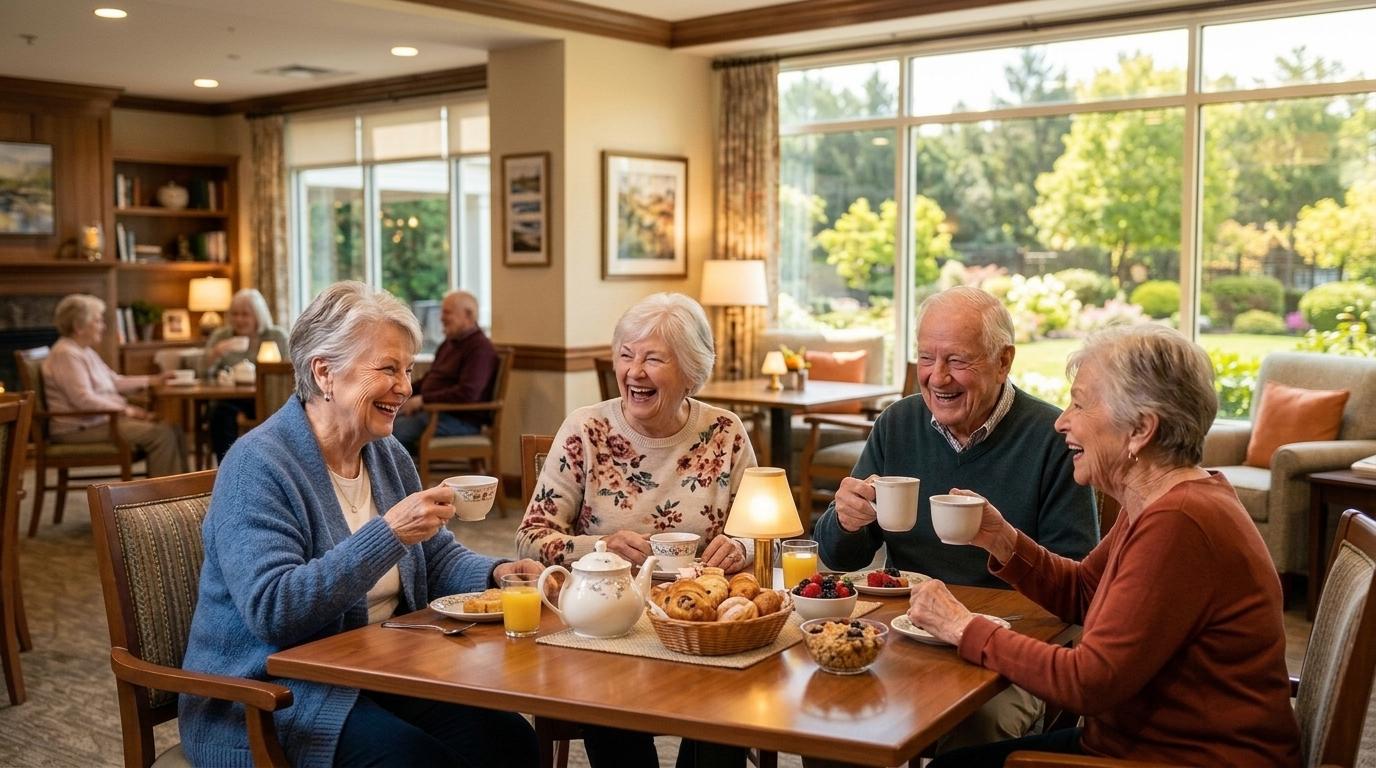
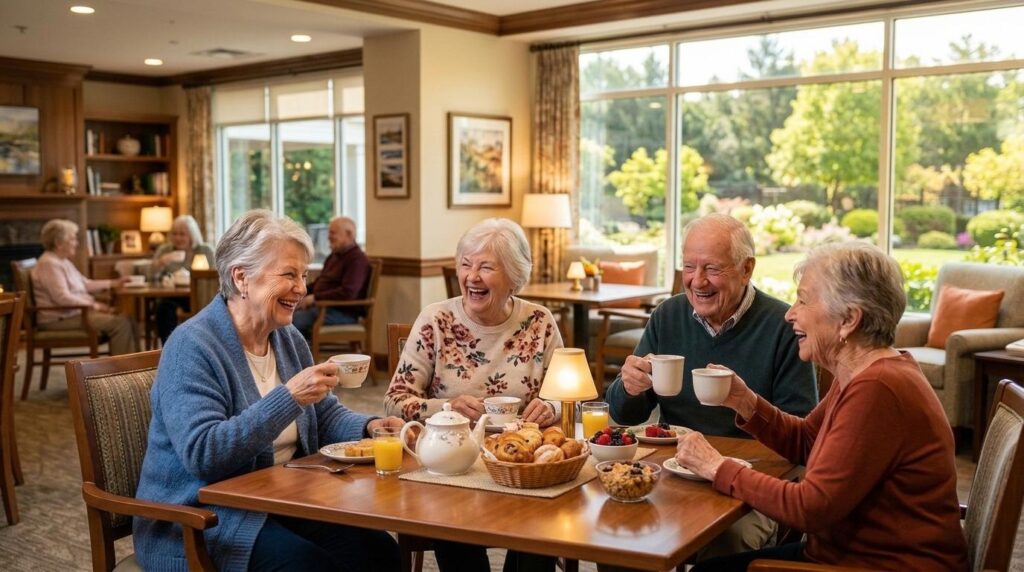
One of the things families notice right away is how warm the dining experience feels. Residents enjoy home-cooked meals served daily in a welcoming setting — not a cafeteria line, but a real meal shared with neighbors who are becoming friends. Good food and good company go a long way.
Beyond meals, there’s a full calendar of activities, programs, and social opportunities to keep life interesting and connected. Common spaces are designed for gathering. They are a place to laugh, share stories, or simply enjoy the company of others. That sense of belonging can make a real difference in your loved one’s day-to-day happiness.
How Assisted Living Differs from Other Senior Living Options
Assisted Living vs. Independent Living
Independent living is a great fit for seniors who are largely self-sufficient and want a vibrant, maintenance-free lifestyle with peers around them. Assisted living, on the other hand, adds a layer of hands-on support for those who need help with daily tasks. If you’re weighing the 2 options, this side-by-side look at independent and assisted living can help clarify which might be the right fit.
Assisted Living vs. Memory Care
Memory care is designed specifically for those living with Alzheimer’s or other forms of cognitive decline. These communities offer a more structured environment with specialized programming. Assisted living is a better fit for those who need general daily support but don’t require that level of specialized care.
Is Assisted Living the Right Fit for Your Loved One?
It can be hard to know when the time is right. Some signs that more daily support may be helpful include:
- Missed medications
- Difficulty with personal hygiene
- Increased falls
- Noticeable changes in mood and social engagement
If you’ve started to notice these things, it may be worth exploring who assisted living is really designed for before making any decisions.
Starting the conversation as a family with kindness and no pressure can open the door to real solutions. And one of the most grounding things you can do is tour a senior living community in person. Seeing the space, meeting the staff, and watching daily life unfold tends to answer a lot of questions that words simply can’t.
At Highland Senior Living in Little Falls, assisted living is built around your loved one, their story, their needs, and their sense of home. Reach out today to schedule a tour and see what life here can look like for your family.